

Editor’s Note: It is Day 321 of the Great Con II. The current president used another shooting to announce a “permanent pause” on immigration from “Third World countries”, a term open to his own interpretation. Asylum for refugees is halted, regardless of the threat back home and regardless of their past sacrifice assisting American soldiers. The legal team of the regime continues to create trumped-up charges and use public resources to chase personal enemies. Meanwhile, morale in the State Department and FBI has cratered.
Where there’s no shame, there is no leadership.
Growing up in the church, I learned just as much about dying saved as living good. And if you’ve lost someone you love, you’ve also experienced the pain of living while the other has passed from your sight to your memories.
When I was a small child, I remember seeing my father cry for the first time at the death of his father. He read the doctor’s note to the family. I only understood that grandpa, who drank coffee from his saucer and smoked a pipe, had gone somewhere else.
During high school, a boy I went to school with drowned. One day, he sat on the bus looking out the window. The next week, he was gone. It was more of a question of “why”? What was the purpose of that?
Death is the one mystery we all share equally. It can’t be avoided, though we spend most of our lives doing just that. The moment it becomes unavoidable, we either wake up like Dickens being visited by ghosts, or run further away toward fear and denial. Some turn to religious belief to find meaning in both life and death. Others prefer to be stoic about facing the end, devoting their waking hours to a life that matters.
The ancient philosopher Epicurus suggested that death is nothing to fear, because "where we are, death is not, and where death is, we are not." If you follow that logic to its end, death becomes almost irrelevant. It's not coming while you're here. So why spend so much energy on it?
But here's the thing: our approach to dying isn't just personal philosophy. It can be overly influenced by the powers around us. Even Russia’s dictator Vladimir Putin used the notion of an honorable death, telling those incarcerated it was better to die for the motherland than to die in prison. Why not give your life to kill Ukrainians in the name of Mother Russia? Make up for your wasted time.
When you control the narrative around death, you can make people surrender their living willingly. You can convince them that obedience today means resurrection tomorrow. That fear of dying meaninglessly is worth more than the freedom to actually live.
The thought of living a life in freedom with meaning is the hallmark of being human. We are creatives. We can see the past and the present, and know (whether we accept it or not) that there is both a future and an end. Yet instead of using that knowledge to live more deliberately, more awake, more inspired, we let systems and cultures influence us to focus less fully on today; that the end and the hereafter is more important.
Marc Maron, the comedian and podcaster, talks about how he plans to die, often describing himself as a middle-aged guy surrounded by cats, joking that his end of the world will smell like kitty litter. But beneath the absurdity, there's a kind of resistance. He's chosen to live openly and intentionally, rejecting the need for a "dignified death" crafted by someone else's standards. He values individualism and freedom. Everything is about the now.
Essayist Mary Frye captured something similar: "Do not stand at my grave and weep; I am not there. I do not sleep." She understood that the place and manner of death means far less than the mark you leave while living.
Most of us are raised with the story that death is the final exam we need to pass. We construct elaborate narratives around it about honor, dignity, and meaning, but we must be mindful that such lessons don’t serve someone else’s interests or beliefs.
Dictators and autocrats need us afraid. Religious zealotry needs us preparing. Cultures need us obedient. Entire industries bank on us dying at a certain time in a certain way.
All that fear makes us more manageable, maybe even gullible.
The most radical act isn't to focus on dying. It's living so deliberately that we influence others to do the same. To avoid a life dictated by fear or power or systems designed to extract our obedience (or wealth) in exchange for meaning. While nations and religions can offer support for how to live, or even how to cope with the death of loved ones, we should be cautious when it comes to narratives of how we die.
We are spending too much time focused on the unknown instead of doing all we can with the known. The Tuesday afternoons we waste on scrolling. The conversations we don't have with neighbors. The rituals and routines we grow comfortable with over what we could have been changing. That's where we're actually dying, in all the small choices to defer, deflect, and avoid taking responsibility for individual and collective actions today while we live.
So here's what I've come to believe.
I can’t spare any more time thinking about death. It’s not that I don’t fear it, but I want to live as if it fears me. It’s more important to me that my humans and your humans have opportunities now in life and the tools to make better decisions. We have so much left to do, and to be.
We are not dying too early. We are living too late.
NO BS HITS
Follow the money is an old quip to find the culprit. This website did just that with the current regime.
Problems arise when we get greedy and take too much. Read this piece from The Atlantic and Aaron Ross Sorkin on the parallels between 1929 and today.
He walked across the world, and found human kindness everywhere. Remember this.
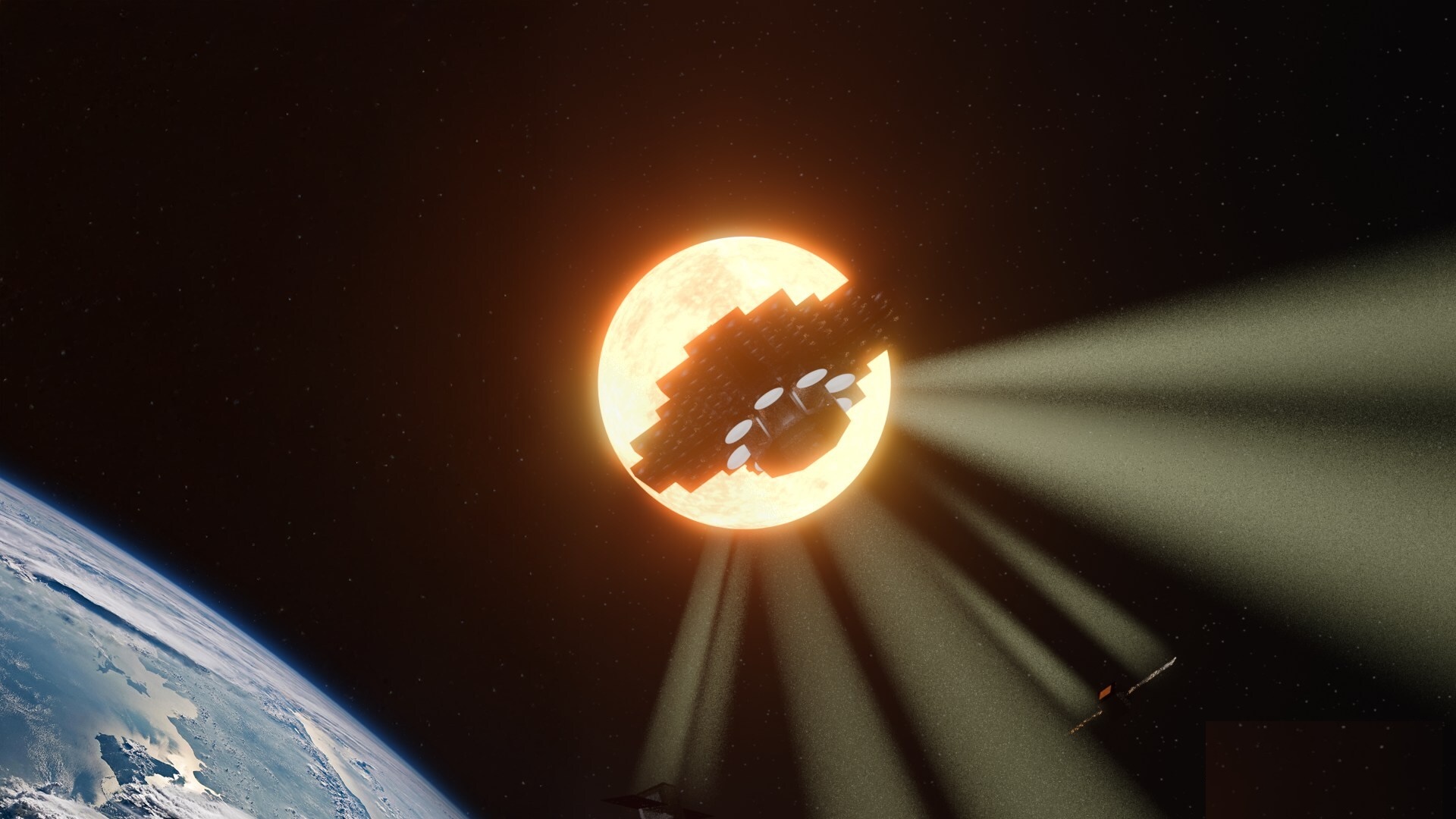
If we could learn to follow better leaders and keep our eyes on the stars, science fiction may no longer be fiction. Star Catcher Industries has smashed records by transmitting 1.1 kW of wireless electricity at NASA’s Kennedy Space Center. To put that in perspective, it’s only enough to run about ten average home refrigerators at once or brew more than nine pots of coffee simultaneously.
Not that much, but think about it. Their method, shooting laser-refined sunlight onto standard solar panels, outpaces DARPA’s previous work and hints at a future where satellites and possibly entire cities could be powered from space. If Star Catcher pulls off its next steps, the energy world may finally see a meaningful pivot away from fossil fuels.
These are the wins our kids can experience and benefit from if we work together.

A really good piece of writing here. Revenge is an issue I have really worked to coach myself on. When you’ve had family members, friends, or colleagues you feel were mistreated, or lost a job based upon lies and innuendos, the concept of revenge can become a driving force. What I’ve realized over time is that it eats up a lot of energy. Though there may be cases that the concept of revenge has an arc of justice to it (finding and stopping Nazis, for example), in most cases it simply damages the seeker.
It may be that overcoming such a distinctly human emotion is a trait that we must master to advance to the next level. Though much of history is written and recorded by acts of revenge, such has also hampered the scale of progress. Further, I tend to believe that in most cases, certain destructive acts have a life of their own, and whether through karma or some other unknown, outcomes have a way of balancing.
At the core of most religious beliefs that are based in a true spiritual intent, they recognize the folly of revenge. Though we get a sense of satisfaction when someone gets their comeuppance, I would advise to leave it to the movies and stories to deal with such feelings, and let others have axes to grind.
Use your life force on better things while you have time.
And Now….
We are in the last month of 2025. Winter is here and so are the holidays. I hope you wrap up your year with growth and love. Keep up your reading and your progress.