

In partnership with

Editor’s Note: Quick FYI. We're living through unprecedented levels of presidential dishonesty. So we built something to help: Truth or Trump, a fact checker that instantly verifies (or debunks) whatever claim you're hearing. Got a question about the latest lie? Ask it. Go to the website and try Truth or Trump now.
It is Day 314 of the Great Con II. While most leaders would focus on the victim and the victim’s family, our current president exploited the tragic National Guard shooting to fuel more anti-immigrant BS. He also pivoted to smear Somali immigrants with zero connection to the incident, claiming they’re “destroying” Minnesota. His regime announced sweeping Green Card reviews targeting 19 countries and blamed all Afghans for one man’s actions.
Weaponizing tragedy has been a favorite tool of autocrats throughout history.
Know your history so you don’t get played.
Thanksgiving with family and friends usually includes a movie during the week. Over the years, we’ve seen some winners and a few duds. I still recall the one Thanksgiving pre-kids when we had friends over, dropped the turkey on the floor, still ate it, and went to see Mr. Holland’s Opus (a good film if you haven’t viewed it).
I tend to go to movies a lot. As early as I can remember, I have had a creative side and often sense I should have gone into creative writing or film school. But it’s not just about the movie; it’s about the event. It’s being in a public space and seeing others with a similar mindset for the love of good storytelling. It’s a tradition as old as time of being entertained for a couple of hours by someone else’s wit and experiences.
A few years back, I was in a conversation of board members where I was most definitely the financial lightweight of the group. We’re talking about people who manage tens of millions of dollars of other people’s money. AMC stock came up, which at the time was in a healthier position than it is now. The comment of one financial advisor was to sell it all, that going to the movies was a dying activity.
I could not help but be concerned with the ease of abandoning something that has been a part of people’s lives for so long, and I realized then that movie theaters could someday be gone.
Movie theaters are cathedrals of the public commons. Though they are private ventures, they are some of the last remaining places where strangers can routinely sit together for two hours and share laughter, gasps, and even tears. For over a century, no company has survived and embodied the American moviegoing experience as much as AMC Theatres. Today, AMC is the largest movie theater operator in the world, with roughly 860 theaters and 9,600 screens worldwide.
But AMC's road has been anything but glamorous: its continued survival is not guaranteed. Winter 2020 could have been AMC’s final curtain as revenue collapsed overnight due to COVID-19. Theatres sat empty, and debt threatened to bankrupt the industry. CEO Adam Aron openly told their 700 landlords (many of them malls) that AMC could not pay rent.
AMC’s most unlikely lifeline came not from Wall Street, but Main Street. By 2021, the so-called “meme stock” momentum ignited by Reddit armies turned AMC’s shares into a cultural cause. Over 3 million retail shareholders representing more than 80% of the company’s stock crowdfunded AMC’s survival. I upped my own holdings not for wealth but for support of a public good, out of “stubborn love” for going to the movies. While I could’ve sold at the meme high, I didn’t, and now hold a losing financial position.
But that’s just money.
Preserving a place for shared stories outweighs better returns. That’s what’s been missing in our form of free market capitalism. There need not be a strict system of winners and losers, and not every human need is going to be met by building wealth alone. Whether for the sake of nostalgia or wanting somewhere to go, this was proof that collective actions can outweigh the profit motive.
If theaters like AMC disappeared, the loss would be more than commercial; it would be civic, cultural, and personal. Movie theatres provide neutral ground for teen gatherings, first dates, family outings, and rituals much as public spaces like libraries or parks do. The cinema, as urban sociologists remind us, is a place of collective memory and identity.
AMC and its peers also generate jobs, stimulate nearby restaurants and retailers, create “third places” for youth and families, and support local economies. Their absence could dry up entire pedestrian corridors, amplify loneliness, and impoverish collective life. We’ve seen many instances where the loss of the movie theater anchor in a mall or a strip typically leads to the loss of the entire property.
Critics argue that propping up private companies like AMC with sentimental investment is misguided, a kind of “charity for shareholders.” Let the market do its thing. As this belief goes, if Netflix and other streaming outlets win the movie battle, it’s because consumers prefer it.
But this argument misses the point: not all value can be measured in dollars. Communities also invest in park benches and concert halls and sidewalks and Little League, not because they’re profitable, but because they’re connective tissue. Theatres are among the last privately run, universally available indoor public gathering places open to all, weather be damned, for the price of a ticket.
AMC’s retail shareholders, knowingly or not, wagered on that broader value. It’s an unusual social contract between public space and private risk. The future of going to the movies remains far from secure, but the last five years have proven that movie theatres are not relics, not yet.
Public gathering spaces needs to be protected as much as the drive for financial profit, lest we become a nation of individuals without a community. And here's the uncomfortable truth: when we let shared spaces die in the name of shareholder returns, we're not just losing movie theaters. We're actively choosing isolation over connection, powerful algorithms over humanity, and a future where even our entertainment is consumed distant and alone.
Learn AI in 5 minutes a day

This is the easiest way for a busy person wanting to learn AI in as little time as possible:
Sign up for The Rundown AI newsletter
They send you 5-minute email updates on the latest AI news and how to use it
You learn how to become 2x more productive by leveraging AI
NO BS HITS
If we can turn shit into power and tackle climate change at the same time, anything is possible. Remember that.
I’m glad this one mentioned reading. Too many screen distractions will actually inhibit your focus power. Here are steps to stop it.
To understand the MAGA movement and how to stop it, read this great piece from David Brooks.
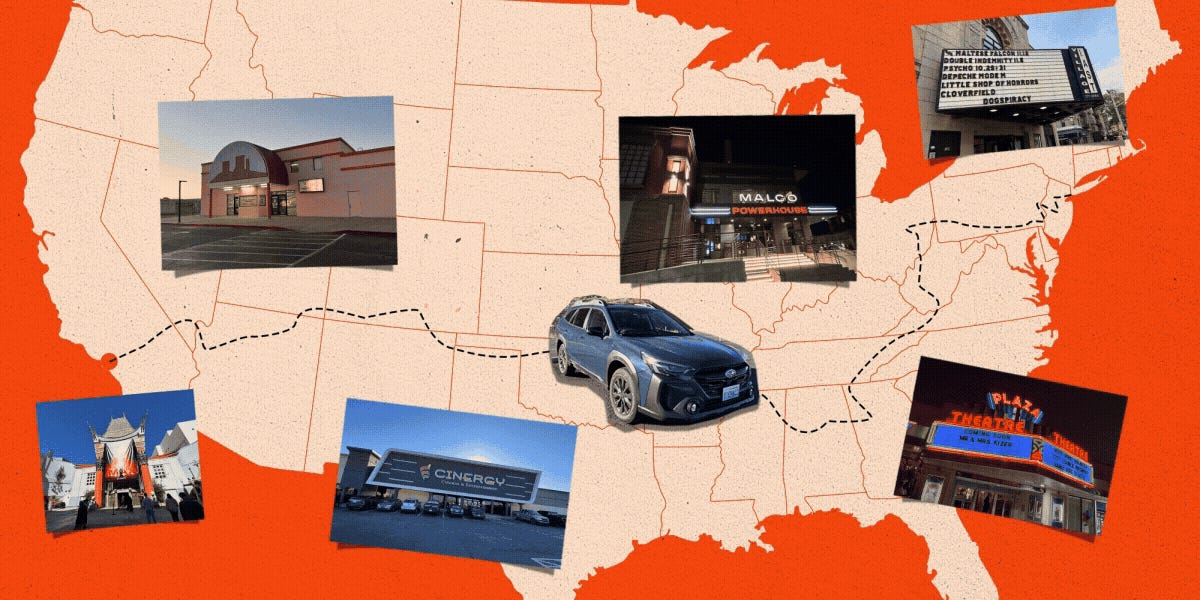
I loved reading this. For years, whenever we have traveled through towns, I’ve stopped to admire the old movie theatres. One town had a theatre that was nearly a hundred years old with velvet curtains, marble busts, and a rounded stage. Another still had the separate entrance and stairs to the balcony from the time of segregation. Most of them are gone, leaving only a skeleton of a building with a faded marquee, but every now and then you catch one that still operates and has the grand vertical neon lights out front.
Social gathering places like movie theatres and malls have been breaking down across the country. It is an indicator of the split in our democracy and the lack of public policy to ensure public places remain safe and accessible for families. We’ve spent far more time and energy on ensuring any useful idiot can have access to a gun, than we have on protecting the social glue that keeps communities together. If we lose movie theatres, we will be losing a lot more than movies and buildings.

I believe we are well past the time to establish this. If we have ways to get social security checks out and make tax returns easy, we can figure out a safe and easy method to vote. We will know we are out of the dark era of the current politics when we can vote electronically without issue.
This story is a friendly reminder that we have had almost no issues with voting until the “lying as a political strategy” gained supporters. Don’t forget that Fox Entertainment cut almost a billion-dollar check to one of the nation’s voting systems for its false reporting on the use of voting machines. Most of us do so much electronically with our money and purchases now, voting should be no different, and it would make it that much easier to get to full democratic participation.
And Now….
The year is closing out with the great month of December. Think locally when it comes to buying. Think about gaining and sharing knowledge and consider gifting books. Value your time so that you spend a good portion of it with family and friends. Recognize this moment will never come again, so value it.