

Editor’s Note: With this week’s bloviations and the 60 Minutes black swan event, we must continue to endure but not be passive. The approaching efforts by this regime and the coming midterms will completely depend upon good people everywhere doing their part.
Call this premature optimism if you want. In this moment of dark American history, it can feel almost naive to even mention the things Americans used to be known for: diplomacy that ended wars instead of starting them, partners who were really treated like partners, science that got a seat at the table, and public schools and universities that everyone loved. Pretending we'll find our way back without addressing these losses will itself be a fantasy like the one this regime is trying to create.
Don't dismiss what follows as something distant.
If this period teaches us anything, it is the oversized role that good governance plays in pointing a country in the right direction. We’ve been leaders in health and peace initiatives for a century. There’s a reason we host the United Nations and consistently produce Nobel winners. We helped rebuild Europe after WWII and we get the calls first at a disease outbreak.
Despite this record of world achievement, the current administration has frozen numerous science and energy initiatives using made up right wing beliefs, withdrawn from the Paris Agreement on climate change for the second time, and yanked billions in pledges from public health protection all around the world.
Stewardship of the earth, a cornerstone of both Christian and Buddhist beliefs, has been replaced by an acceleration of AI and making more things that go boom.
Now look east.
China, a government not exactly known for clean hands on pollution or letting its people speak their minds, has assembled the largest renewable energy fleet in human history. As of 2025, its combined wind and solar capacity surpassed 1.6 terawatts, triple the United States and India combined. In a single year, China installed more new solar than the rest of the world combined.
It is not doing this out of love for the planet. It is doing it because it sees that whoever owns the energy transition owns the next century.
And Beijing is not only taking the lead at home. While the U.S. has pulled back its soft power efforts, China is gleefully working to fill the void abroad. Africa became the top destination for Belt and Road engagement in 2025, with green energy investment hitting record highs and Chinese-backed projects accounting for roughly 40% of new renewable capacity in sub-Saharan Africa from 2020 to 2024. The United States, the nation that wrote the Marshall Plan on how to lead through generosity, is currently writing itself out of the next chapter.
Here is what makes the timing of all this so insanely out of step.
Microsoft, an American born company, just announced that in 2025 it matched 100% of its global electricity consumption with renewable energy, having contracted 40 gigawatts of clean capacity across 26 countries through more than 400 deals. That’s one company doing what one company can do, yet it still leaves a basic problem untouched.
Where is our government? Think about that. Corporate willingness is not necessarily the bottleneck. It’s a lack of a coordinated national policy.
When there’s a disengagement by our American government, the rest of the world suffers. That’s the reality of being born in the greatest democracy in history. World problems is the gap a country like America was built to fill. And it is the gap where moral debt and strategic opportunity sit in the same place.
The transatlantic slave trade and a century of colonial extraction were not just historical wrongs. They were the financial base for much of Western industrialization. Acknowledging that does not require a national apology but it does obligate us to notice that the nations with the least power today are the ones whose wealth was pulled out by force to build someone else's grid. There are still 600 million Africans without electricity.
A serious world energy policy would serve several goals.
Imagine a new Marshall Plan focused on worldwide sustainable energy. The original Marshall Plan cost about $13 billion between 1948 and 1952, roughly $137 billion in today's dollars and close to 5% of US GDP at the time. A program at that scale, aimed at building solar, wind, battery storage, and grid infrastructure in countries that suffered most under colonialism and slavery, would do four things at once.
It would let African nations leapfrog the old coal and oil century entirely, the way they leapfrogged landlines for cell phones. It would position American firms as technology partners rather than resource extractors. It would offer a credible counterweight to China’s Belt and Road. And it would mark a down payment, finally, on debts we have been carrying for centuries.
The IEA estimates Africa needs around $15 billion a year just to reach universal electricity access. That is a number a determined country, leading a willing coalition, can actually meet. We’ve spent that much in a month bombing Iran.
This isn’t coming under the current White House. They are too busy mistaking revenge for strategy. The climate crisis is not going away because a small subset of Americans find it economically inconvenient. Peace and prosperity is not going to advance through social and economic isolation.
The next administration that takes the opportunity for worldwide sustainable energy seriously will inherit a planet ready for such leadership. If you want to slow migration, lead the renewable transition. If you want allies, lead the renewable transition. If you want to make the case that America still means something abroad, lead the renewable transition.
The self-destruction on offer right now, the determined insistence on disengaging from the rest of the world, is not realistic. It damages our brand and saddles our kids with problems that were avoidable.
When it’s all over, we will not only have to reconcile within, but with those around the world.
A Marshall Plan for Energy is the way to bring us back, and the world back with us.
NO BS HITS
An excellent read on a woman who gave her career to public health, lest we forget at our own peril.
If you haven’t yet, it’s a good time to read Lord of the Flies. And yes, if you need a shortcut, Netflix’s new adaptation of the book was quite excellent.
Keep an eye on this because it may be moral obligations in the form of religious authorities who finally bring reason to the growth and use of AI. Here an Anthropic co-founder has surprisingly and courageously joined with the pope.

/peanutize
verb | pea·nut·ize | \ˈpē-nə-ˌtīz\
Definition: To publicly shrink the cost of one's own decisions by renaming the wreckage as something small, snackable, or beneath notice. To wave off consequence by reaching for the language of the concession stand.
Etymology: From peanut (a thing of negligible value, often invoked by those who have never had to count them), plus the verb-forming suffix -ize, meaning to make a habit of. First field-tested when a president who had just bombed Iranian nuclear sites described the resulting spike in gas prices as "peanuts."
Related forms: peanutized (past tense), peanutizing (gerund), peanutization (the broader civic condition).
Used in a sentence:
After driving the family minivan into the neighbor's azaleas, Greg peanutized the damage by noting that azaleas grow back and minivans were, frankly, overrated.
Asked about the unprecedented heat dome cooking the Midwest, the senator peanutized it as "a warm patch," and then peanutized the warm patch as "summer."
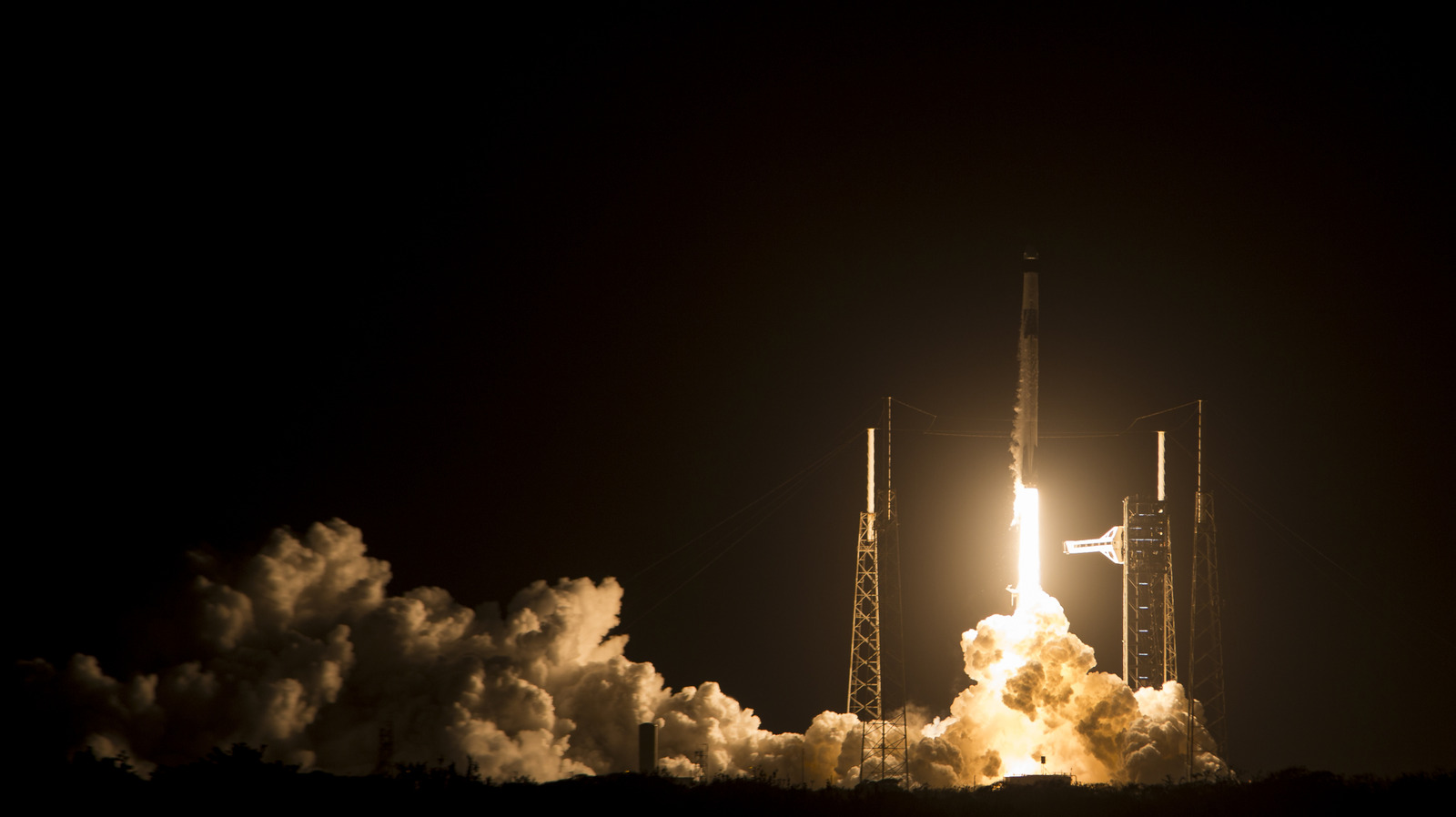
What I want you to learn from this piece is how much the sky above us has become a battlefield for tech giants. The billionaire bros know that the future lies in the cloud, where materials and planets remain to be discovered and harvested for materials, and where communications and data processing can cover the world at dramatically fast speed without overheating. This is an area that needs strong governmental oversight. This type of technology will impact our services here at home, but also be offered by companies that have been more prone to listen to the whims of their owners than the current and future needs of the planet and its people.
Do you want Musk making a decision on who has access to data and who doesn’t? Do you trust Musk, Bezos, or Andresson to ensure the sky above is safe, doesn’t spy on you, won’t clutter the sky, and won’t crash on our heads? A democracy run by a handful of men is a fragile freedom, merely steps away from centralized control. I sometimes yearn for the days when there was a NASA that led all space pursuits. It wasn’t perfect, but I feel there was much more consideration for the public good.


When you are governed by a carpetbagger, your government gets pushed around. I’m not happy with what we’ve done to the Iranian people. We have made life much more hard for them, forget about the price of our gasoline. But it makes me furious when a businessman can push governments around and treat them like empty spigots. Musk has done this in Ukraine and he’s doing it to us. Let’s try not to forget that Musk is not a self-made man. He has lived in and taken advantage of all that the United States has to offer. American time, resources, scientific history, loans, grants, and energy built his companies. When individuals think they are beyond the reach of governments and able to tell such governments what to do or pay up, that is a real problem.

Changhan Kim, CEO of KRAFTON (the South Korean company behind PUBG), recently became a case study in how to become an asshole.
KRAFTON acquired Unknown Worlds Entertainment in 2021 for $500 million, with a $250 million bonus tied to Subnautica 2's sales performance. When internal projections showed the sequel was on pace to trigger that payout, Mr. Kim panicked. In looking for ways to avoid the payout, he ignored his own staff and opened ChatGPT instead.
When the chatbot told him the earnout would be "difficult to cancel," Kim didn't accept the answer. He kept pushing until the AI helped him cook up "Project X," a corporate takeover scheme designed to oust studio CEO Ted Gill and seize control of the game. Kim also deleted specific ChatGPT logs once litigation began.
A Delaware judge wasn't impressed. The court ordered that Gill be reinstated and to pay the $250 million bonus Mr. Kim spent a year trying to avoid.
Ethics and character don’t stop when you start making money.
Especially when you make money.
And Now….
I grew up seeing my parents watch 60 Minutes. It has been THE journalistic mountaintop of the United States. Believe me when I tell you. The promotion of fear and intimidation over free speech cannot stand in our country. It is an affront to our parents and to our kids.
I’ve got two books going right now and plan to be done with them by the end of the week. Keep up your own reading and your progress. Mention it to someone you know. Continue to practice your gratefulness.