

Editor’s Note: We are in uncharted territory with the current regime. Each day brings a new insult to norms, though the incompetence shown with Iran is triggering some dormant thinking. The economic pain in the US and around the world will continue to worsen, but we can’t let it be used to justify even more unlawful events. I take heart at the deep current of American resolve to push back. It’s happening at every level. Just don’t stop until they are gone.
I don't recall whether it was a reading assignment as an undergrad or grad student, but E. F. Schumacher saw the world we were losing long before the rise of cryptocurrency, massive data centers, or cheap quadcopters flying over cities. His little book, Small Is Beautiful: Economics as if People Mattered, argued that modern industrial economies like the United States burn through resources, dehumanize work, and worship big for its own sake. His solution then is more relevant now: small-scale, human-centered, decentralized systems (think local energy, local business, local currency) and "appropriate technology" that fits the community instead of overrunning it.
This has been made difficult by the loose rules of our economy. Cities have been reluctant to push back on corporations that promise jobs and increased property tax revenue, regardless of the net outcome meaning less local resilience. That's how conditioned we are.
Ironically, it's the military embracing small is beautiful. I’ve been watching Ukraine closely. Outmanned and outgunned by an invading Russian force, they turned to low-cost drone operations and changed the foregone outcome. The United States has taken note, especially after million-dollar weapons didn't get the job done in Iran, some brought down by cheap Iranian drones.
The same awakening is spreading through energy, where centralized grids and giant utilities are scrambling to handle AI energy demands. AI companies are even investing in mothballed nuclear projects. Meanwhile, rooftop solar, local microgrids, and community energy co-ops quietly show that a patchwork of small producers can cover loads the same or better than large central producers. Bigger isn't better. When one big grid fails, the lights go out for millions. With smaller grids, failure becomes local and survivable.
"Too big to fail" was sold as stability, the same as trickle-down economics. The size of wealth and business would ultimately support all levels. In practice, it became a doctrine that rewards stagnation and insulates the worst decision-makers from consequences (remember Enron, GE, Shearson Lehman). Being big tends to lock in incumbents, puts oversize value on the company stock instead of its staff, chokes off smaller competitors, and demands that the public subsidize the status quo through graft and less taxation.
That's a mafia market.
Any time power concentrates, freedom shrinks. Since 1980, our political and financial systems have spent decades centralizing power in a small class of institutions and leaders whose incentives are decoupled from the well-being of ordinary people. When a single narcissistic executive, autocratic politician, or central banker can send shockwaves through millions of lives with a personal whim or one poor decision, that does not make for a resilient society.
Schumacher's answer was not naive. He simply insisted that technology and industry serve people and place. He coined "appropriate technology" precisely so communities could build and maintain tools themselves, creating "production by the masses" instead of "mass production." That distinction matters enormously now, especially as AI reshapes both creativity and work.
When almost everything you rely on is scaled beyond your local control and comprehension, your life becomes hostage to forces you can't see and can't influence. Your paycheck depends on the quarterly earnings of a multinational. Your electricity bill depends on a regulatory filing you've never heard of. Your savings depend on algorithmic trades between institutions you'll likely never enter.
This is why small and local isn't just "nice." It's a form of defense against corporate bad actors.
A community that can feed itself from within a few miles, generate some of its own energy, employ a higher percentage of its own people, and care for its most vulnerable without waiting for distant anonymous approval is a community that can absorb shocks. It is less exposed to the tantrums of a narcissist. It can say "no" more often. That's what freedom actually looks like in practice.
Schumacher talked about economies "as if people mattered" because he assumed connection, trade, and exchange would provide the necessary connections. The key is that these connections are chosen and balanced, not imposed. You can feel this tension everywhere right now. Jobs, savings, bills, even our digital lives are increasingly over-reliant on a few platforms and policies.
To protect real freedom through smaller, more local choices, some of our comforts have to go, specifically the focus on lowest price. The local shop won't always beat the price or selection of the giant online retailer, but you realize your money stays longer and supports your neighbor’s job. In exchange, you get something back our culture has almost forgotten:
a shared fate.
You get to live in a place where your choices actually matter. You see the feedback loop when you can talk to people and look them in the eye when things go wrong or when they go right. It can be exhausting if you've grown used to the out-of-sight, out-of-mind consumerism we have, but it's where community solidarity and resilience come from.
Schumacher's warning was simple: no economy can grow forever on a finite planet, and no society can stay healthy when people are reduced to units of output. He believed there is "enough for everyone's need, but not for anyone's greed," and argued that both economics and technology must be bound by ethics and ecology. In 1973 that sounded quaint. In 2026 it’s urgent.
Learn the names of your neighbors and the owners of the nearest independent businesses. Choose a credit union over a megabank. Support community land trusts, local farms, co-ops, neighborhood congregations, and civic groups that keep ownership close to home. Push your city to invest in local energy resilience instead of courting the next big thing. Defend your elect officials’as ability to say no.
Small is how you stay free.

Why would American doctors move to New Zealand? It’s worth reading and understanding.
This great American who tragically died at the end of last year asked the right question: How does fiction become accepted truth?
Road kill has become an accepted norm in the world. But what if we made effort to do better? Read this joyous piece.
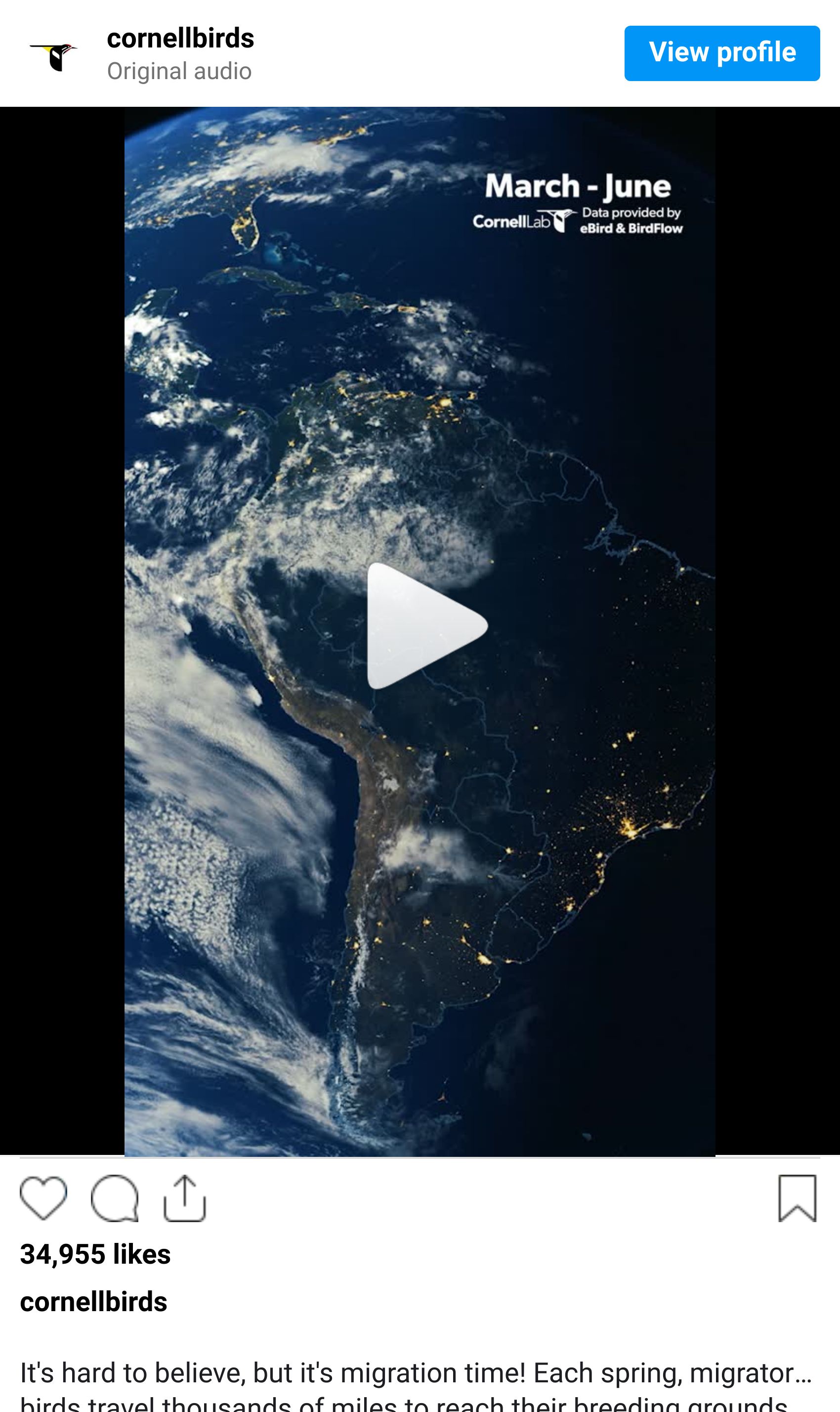
The birds have been following migratory routes for thousands of years. Think about how phenomenal this is. While we obsess over human intelligence, many species quietly repeat journeys across continents year after year. The only real obstacles have been human-made.
As you watch the birds, consider the distance they travel to live. Many return along similar routes, often to the very same nesting spots. While I miss the Mississippi kites that used to visit the oak across the street, I now wonder if it’s the same family of chickadees that returns to the birdhouse in the tangerine tree.
We only get a short time window to steward our parcels of land. Make sure to make room for the birds.

Let’s see how much sense this makes. The United States has long had the best-rated higher education system in the world. The “best and brightest” have historically come here for opportunity, and many stayed to build lives and companies. The result: immigrants helped create firms from NVIDIA to Google, keeping America at the front of major industries.
Instead of doubling down on this advantage, which also quietly weakens our competitors, we’ve decided that chaos is the new theme. Because of derelict gun control, rising costs, and a hateful atmosphere toward immigration, we’re pushing this talent back home. It’s stupid economics: fewer brains, fewer builders, fewer consumers, and fewer real connections to the rest of the world.


The Mandalorian and Grogu will hit theaters May 22 as the first Star Wars movie in seven years. Opening weekend will set a record and the headlines will pronounce Star Wars back. This will be a blockbuster summer like those of the past.
Nearly 99 percent of Florida is in drought along with most of the rest of the Southeast, running the driest stretch on record back to 1895. By July, at least two Southeastern states will impose mandatory residential water restrictions, and no governor in the region will say the word climate at the press conference.
Corporate CEO’s will finally find some backbone. The pressure has been building all year. The Supreme Court struck down Trump's emergency tariffs in February, Procter & Gamble has absorbed a billion dollars in annual tariff hits, Campbell's, Constellation, GM, Gap, Levi's, all lined up for refunds. And Trump this week warned he'd "remember" companies that file to claim them, but the defiance will come before July 4. Once one goes, three more follow within two weeks. The dam holds corruption until it doesn't.

Signs
Marc J. Yacht 4/2026
The night glows with a world on fire
One can feel and touch the silence
A great sense of a mighty pyre
Empty hopes for an alliance.
A witches moon hovers on high
Shines so brightly through the fine mist
An eerie halo meets the eye
Perhaps a whole cosmos adrift.
The Earth a spec among the stars
Disrupting a peaceful cluster
Hot and troubled, so many scars
And long ago lost all luster.
A flick of the maker’s finger
Would attain the desired peace
From outer space not a whimper
Earth, a grim world on fire, would cease.
And Now….
Pray for rain. The birds and critters need it. We need it.
Continue to practice your gratefulness.
Always strive to be a good human.